 | Diagnosing Osteoarthritis in the KneeAs mentioned previously, the most common form of arthritis in the knee is osteoarthritis; however you can be diagnosed with more than 1 form of arthritis at a time. Medical professionals (such as an orthopedic surgeon or physician) will be able to assess and test whether you have knee arthritis, and then will determine what type you have through a variety of processes. To help your doctor achieve a proper diagnosis, he/she will begin with a medical history about you, your current condition and symptoms. They will inquire about the intensity of your present pain, the duration of your symptoms and the limitations you are experiencing. Details about what instigated the problem, when it started, and whether or not you have ever had treatments for this or a similar condition in the past, are very helpful in assessing your injury. 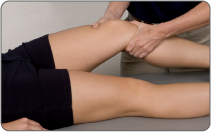 A physical examination will be performed to determine if you have any signs of knee arthritis or other knee injuries. Your doctor will visually assess and palpate (feel) the bones and soft tissue in and around both of your knees to evaluate symmetry and recognize differences. This will identify any abnormalities, such as mild or severe inflammation, fluid, bone deformity, and weakened muscles. He/she will press on the injured side of your knee joint to test for point tenderness and help determine the main location of your injury. He/she may ask you to complete a series of knee and leg movements such as moving your knee from a bent to straight position (or vice versa), or rotating your knee to see what motions cause pain, weakness, instability and/or grinding, catching, popping or locking. These sounds or restrictions will often indicate a soft tissue tear and/or arthritis in your knee. Common Knee Osteoarthritis Diagnostic Tests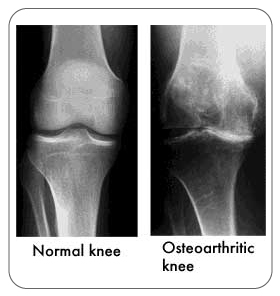 A medical professional will sometimes recommend diagnostic testing to obtain more detailed information, and assess the amount and/or type of damage done to your knee. There are a variety of different tests available to help them analyze the situation; however these will be dependent on the degree of your injury. X-rays will provide a two-dimensional image of the overall structure of your knee. It is helpful in identifying loss of joint space, arthritis, abnormal bone shapes such as bone spurs or bone cysts, fractures, and degeneration (wear and tear) on the joint. X-rays can be helpful to exclude any other possible causes of your knee pain and assist the doctor in determining if surgery should be considered for your specific situation. 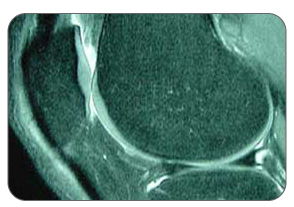 MRIs (magnetic resonance imaging) will provide more detailed information and will help to evaluate the soft tissues in and around your knee joint (muscles, tendons, ligaments, menisci, other connective tissues). It can identify ligament and meniscal damage, and help to determine the extent of your injury, the displacement and degree of your tear, fluid on your knee, a discoid meniscus and/or other associated conditions. 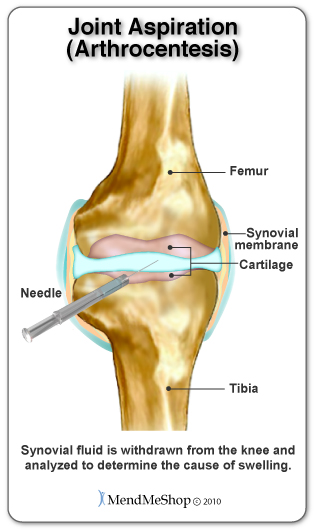 Joint aspiration (arthrocentesis) involves withdrawing and analyzing fluid from your knee via needle and syringe. This will help to determine if there is inflammation and the cause of your joint swelling, for instance gout or some kind of infection. Arthrocentesis can be performed in your doctor's office. Blood tests cannot diagnose osteoarthritis, but may be ordered to rule our other causes of knee pain, like rheumtoid arthritis. Arthroscopy is used to visualize and repair damage to the knee. A small incision is made in the knee and an arthroscope with a camera is inserted to look inside the the knee joint and assess any damage. Further diagnostic tests such as CT or CAT scans (computerized tomography) or diagnostic ultrasound can be used to determine the degree and location of your injury if required.
Product Advisors are available 9:00 am to 5:00 pm Eastern Standard Time Monday to Friday. Learn More About Knee Injuries & TreatmentsI want to learn more about post-surgery recovery. I want to learn all about common causes of knee pain. I want to learn more about TShellz Wrap® Circulatory Boost I want to learn more about Ice & Heat: Which Is Better For Treatment? I want to learn more about Knee Treatments. I want to learn more about Runners Knee. I want to learn more about Hoffas Syndrome. I want to learn more about Knee Arthritis. I want to learn more about Knee Trigger Points. FREE SHIPPING ON ALL PRODUCTS CURRENTLY ENABLED |
    |