
Dear MendMeShop,

I wanted to take a moment to Thank You and to let you know the fantastic success I have had with your Ultrasound! I'VE FOUNDED IT TO BE A REMARKABLE PRODUCT !! After 18 months of knee pain, stiffness, and medical attention, I have gained definite flexibility and increased comfort from using the Ultrasound three times a day. After many years of playing tennis I walked off the court with knee problems that braces could not help. A MRI found complex tearing of the medial meniscus with severe medial arthrosis. Follow-up with orthopedists and cortizone shots provided temporary relief, but I returned to limping within three months. Surgery was recommended but I opted for physical therapy. I was hoping to seek ultrasound treatment through PT as I have had this treatment for a torn tendon in my ankle, the result of a handball injury 20 years ago. I could find no therapists who utilize this treatment in my current central Virginia area. After 60 years of playing sports, strains and pains, yet no surgery, I took to the Internet for a last-ditch effort. My search led me to the Mend Me Shop and this great little wand. In just two weeks I can walk without limping, get in and out of a chair without moaning and I'm certain I will survive without surgery. Yep, I'm hoping to be back on the courts in the spring, maybe I'm not old enough to know better. Anyway, I'm convinced that the ULTRASOUND is an effective, reliable and easy to administer treatment. I would certainly recommend it to others who are experiencing the type to problems that it is recommended to treat. Thanks again for the Ultrasound and to the MendMeShop.

Rating: Five Star Rating

Gary Bennett


More Facts About Knees:

Babies are born without knee caps. They appear when the child reaches 2-6 years of age.


The knee is the largest articular joint in the body.


Each knee has two tough, rubbery menisci.


One meniscus sits on the inside of the knee joint and is referred to as the medial meniscus. The other meniscus rests on the outer part and is referred to as the lateral meniscus.


Arthritis is one of the most common causes of knee bursitis.


Therapeutic Ultrasound is a highly effective treatment for knee bursitis.


Runner's knee is not exactly a condition in itself. It sums up a multitude of knee disorders with different causes all centering around the kneecap.


Obesity and improper body alignment are responsible for many knee injuries.


Optimal knee treatment includes avoiding activity, icing the inflammation, gently stretching and warming the area.


Ultrasound can speed ACL, PCL and meniscus recovery significantly.


Dear MendMeShop,

I am 56 years old and purchased your ultrasound equipment to repair minor joint deterioration in my shoulders, hips, knees, and ankles. I was experiencing minor tenderness and crackling sounds in some of my joints. After one 10-15 minute treatment on each of my joints, the tenderness the next day had mostly disappeared and the crackling sounds in my knees were reduced. Greater flexibility in my ankles was the most amazing. I offered to help my friends and family with treatments on their trouble areas. My 32 year old niece had developed stabbing pains in the arch of one foot (plantar fasciitis?) causing her to hop on the other foot first thing in the morning. With one treatment, she woke up the next morning and could walk instead of hop/limp to the bathroom. She came back right away for a second treatment and to have her husband work on his knee. They both got further relief. Now she and her husband are ready to order their own ultrasound equipment. I also assisted my 94 year old mother that had a frozen shoulder. After two treatments, she gained a about six inches in her range of motion and she became pain free in the resting position. That is very fast progress for all of us. Over the last 3 weeks, more of my friends got relief from the ultrasound equipment for tender Achilles heals, elbows, wrists and neck stiffness. Most comment about how pleasing the therapeutic gel is that has lavender, eucalyptus, and other ingredients. This has been a very inexpensive way to self treat and cut down on chiropractor visits that did not really solve the problem.

Rating: Five Star Rating

Connie Patterson


Anterior Cruciate Ligament Injury (ACL)

Anterior Cruciate Ligament (ACL) tears are commonly the season ending injuries we hear about in sports. In the United States, it is estimated that ACL injuries happen to 1 in every 3000 people and usually occur when the foot is planted firmly and the knee pivots, twists or overextends suddenly.

MendMeShop knee products speeds the healing of ACL injuries and tears

ACL injuries account for more than two-thirds of all knee injuries among skiers and often occur during a fall when the tibia is pushed forward below the femur. Participating in other sports such as volleyball, football, soccer, basketball, and racket sports can also increase your risk of an ACL injury.

When the ACL is torn, the mechanics of the knee change and create abnormal pressure on the meniscus and articular (covering) cartilage of the femur and tibia. As a result, injury to the meniscus can occur if the ACL is left untreated. Once the meniscus is injured, the risk of osteoarthritis increases sharply. Therefore, when you have an ACL injury, it is important to modify or limit activities that increase stress on the knees until your ACL is treated and healed.

Anatomy

The knee has 2 collateral (parallel) ligaments and 2 cruciate (crossing) ligaments. The medial collateral ligament (MCL) and the lateral collateral ligament (LCL) are located on either side of the knee. They provide support to the joint by limiting the sideways motion of the knee.

ACL (anterior cruciate ligament) tear

The anterior cruciate ligament (ACL) and the posterior cruciate ligament (PCL) cross on the inner part of your knee joint. They bond the upper and lower parts of the leg together and stabilize the knee by limiting the rotation and the forward and backward movement of the joint. The ACL connects your femur above the knee to the tibia (shinbone).

Some ACL tears caused by a blow to the knee are accompanied by MCL and meniscus (cushioning cartilage between the femur and tibia) tears. When this occurs, it is referred to as the "unhappy triad".

Who is at Risk?

Although male athletes make the headlines, women experience ACL tears 7-8 times more frequently than men due to hormonal and anatomical differences. Women tend to have stronger quadricep muscles at the front of the thigh compared to their hamstrings at the back of the thigh. This creates an imbalance that can increase the stress on the ACL when landing a jump.

Once the ACL has been damaged, an individual's risk of developing osteoarthritis (degeneration of the joint cartilage) later in life is 9 times higher.

Symptoms

Minor ACL tears may go unnoticed immediately but will appear a few hours later with pain and swelling. Even with a slight tear, your knee may feel unstable and your knee may 'give way' with sudden movements.

More serious ACL tears or ruptures are accompanied by severe pain and often a popping sound. Swelling in the knee usually gets worse for several hours following an ACL tear, with the most rapid swelling occuring within the first 4 hours. The knee may feel as though something has snapped and walking or bending the knee is usually impossible.

Diagnosis

To diagnose an ACL tear, the doctor will move the knee in several positions and examine the knee strength and stability. Common exams used to diagnose an ACL injury include:

  • Pivot Shift Test - While you are laying down, the doctor turns your foot with your leg extended, applies pressure to the outside of the knee and then bends your knee. If your shinbone shows signs of instability, an ACL tear is diagnosed.

  • Lachman's Test - While laying down with your leg bent at a 30-degree angle. The doctor holds your thigh in one hand and top of the shin in the other while moving the tibia forward and backward. If the leg moves loosely without reaching a firm endpoint of its forward motion, an ACL tear is diagnosed.

  • Anterior Drawer Test - The doctor will ask you to lay down with your knee flexed 80-90 degrees (hip at approximately 45 degrees)and your hamstrings relaxed.With your foot stabilized the doctor will grip the tibia with both hands just below your knee and pull it backward and forward to compare movement with your uninjured knee. If the endpoint is not firm when the leg is pulled forward, an ACL tear is suspected.

After a physical exam has been completed, an x-ray may be required to rule out the possibility of a bone fracture. A magnetic resonance imaging (MRI) scan may also be done to determine the extent of the ACL injury and to discover whether any other ligaments or cartilage have been damaged.

A ruptured ACL is typically diagnosed by a doctor with an MRI, as this can also identify whether the meniscus (cartilage in the knee that provides cushioning) is damaged as well. If your meniscus is damaged, you should definitely avoid exercises that could aggravate this condition. There are occasions where surgery is not necessary, or not worth the potential for further damage, as the ACL is not always crucial for people that do not exercise heavily. As with all recommendations for surgery, it is usually advised to get a second opinion.

Treatment

Treatment differs from case to case depending on the degree of instability in the knee and the patient's activity level. Treating an ACL injury with rest, Cold Compression Therapy, Ultrasound Therapy, and Blood Flow Stimulation Therapy will speed healing and improve the function of the knee once you return to your normal activities. Once the ACL has improved and activities can be resumed, you will first want to build muscle strength around the knee under the guidance of a physical therapist.

How to Order

If reconstruction of the ACL is required, using these therapies prior to surgery will reduce further damage and improve the health of the ACL and surrounding tissue so the surgery is less invasive.

Using these therapies after surgery will control pain and swelling, reduce tissue damage, speed healing and treat the scar tissue resulting from the surgery. You will have a healthier knee with a greater range of motion than if your recontructed ACL was left untreated.

Cold Compression Therapy
Cold Cmpression Freezie Wrap Therapy for the Knee

Using ice and compression immediately following an ACL tear reduces pain and swelling and reduces the tissue damage that occurs with soft tissue injuries like ligament tears.

The Knee Freezie Wrap allows you to treat yourself in an effective and convenient way following an ACL tear and after any further re-injury (which is common due to the instability of the knee).

Cold Compression Therapy works by interrupting and slowing nerve and cell function in the damaged area. Once blood vessels are damaged they can no longer carry oxygenated blood to the damaged tissue and therefore cells begin to break-down. The deep cold provided by our cold compression wraps slows cell function thereby reducing cellular break-down. Furthermore, because the cold wraps serve to numb the nerves, the wraps also reduce pain! The Knee Freezie Wrap uses a deep cold gel pack with a medical-grade neoprene compression cover to keep the ice off the skin preventing cryoburn and to keep the cold in the area that you need it.

Ultrasound
MendMeShop Therapeutic Ultrasound treats ACL tears and reduces inflammation and scar tissue

Ultrasound therapy increases tissue elasticity while promoting the flow of blood (filled with vital oxygen and nutrients) to your injured ACL. This cleans the injured area by getting rid of damaged tissue and reducing the inflammation surrounding the ACL and within your knee joint.

During the healing process, scar tissue builds on the ligament and can attach the ACL to the PCL or other surrounding tissue in the joint, limiting the flexibility in your knee. Fortunately, you can treat your ACL with therapeutic ultrasound to soften scar tissue and improve your range of motion.

Not only does ultrasound aid in the duration of healing, but it helps to prevent long term complications. Pain, scar tissue, lack of mobility and arthritis are some of the more common long term complications from an ACL injury. By treating your ligament with ultrasound, less scar tissue is formed reducing the risk of chronic problems in the future.

For those who suffer from long term complications of existing anterior cruciate ligament injuries, ultrasound can help. Ultrasound therapy can help to break up scar and fibrous tissue in the affected area.

How to Order

Ultrasound can also be used to administer therapeutic medicines into the body. This is a process known as phonophoresis. Ultrasound with phonophoresis is rapidly becoming more popular than ultrasound therapy alone.

This therapy can be received using a MendMeShop Ultrasound Therapy System. The treatment is safe, easy, painless, and generally requires between 5 - 10 minutes. It is based on a form of deep tissue therapy, which is generated through high frequency sound waves (that we can not hear). These waves send vibrations deep into your body and slightly increase the temperature of your soft tissue cells. The waves are delivered through a hand held transducer and conductive gel that are used together in a slow, circular motion on your skin over the injured area.

Blood Flow Stimulation Therapy™
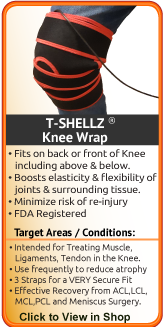
MendMeShop Knee Inferno Wrap speeds the healing of ACL injuries and tears

After the inflammation and swelling is gone you can begin to treat your ACL tear with Blood Flow Stimulation Therapy. This therapy increases your natural flow of blood to speed healing.

By treating yourself with Blood Flow Stimulation Therapy you can increase your body's blood supply to the knee and the natural healing power. In addition, the fresh blood flow whisks away dead cells and toxins that have built up from the injury leaving the area clean and able to heal faster. Our Knee Inferno Wrap provides effective, non-invasive, non-addictive pain relief and healing with no side effects.

MendMyKnee Customer Reviews

During your recovery, you will probably have to modify and/or eliminate any activities that cause pain or discomfort in your knee area until your pain and inflammation settle. With these 3 easy therapies you will notice incredible improvement in your knee. The more diligent you are with your treatment and rehabilitation, the faster you will see successful results!

Surgery and Recovery

If an injured ligament does not strengthen appropriately or an athlete continues to experience the knee giving way, arthroscopic surgery and ligament reconstruction may be necessary.

ACL (anterior cruciate ligament) tear arthroscopic surgery

If you have chosen to have ACL reconstructive surgery, remember that proper post-surgery rehabilitation is very important, perhaps even more important than the surgery itself.

Activities should set out to promote healing, increase flexibility in the knee and strengthen surrounding muscles. Your physical therapist will probably set up a "passive range of motion" program, and put you in a hinged knee brace for a month or two to prevent hyperextension or hyperflexion in the knee.

An important point for ACL patients to remember after surgery is that every effort must be made to increase range of motion and flexibility at the knee. Weakness in the knee can usually be eliminated by extra strengthening exercises, but increased stiffness can sometimes be permanent if not corrected by further surgery.

Not only will ultrasound reduce the pain and inflammation in your knee, but will help increase the range of motion in your joint, reduce post operative scar tissue and increase flexibility in the surrounding muscles, tendons and ligaments. Ask your physical therapist about ultrasound and if it's right for your reconstructed ACL! As with all medical devices, make sure your physician is aware of any treatment plan you decide to take.

Prevention

To prevent knee injuries it is recommended that you gradually increase the intensity of any exercise or activity when you begin and to be aware of the movement of the knee during activity.

How to Order

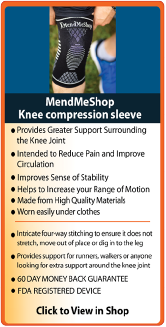
A knee that is supported by strong leg muscles is less prone to injury, therefore, regular exercise and maintaining good physical condition, particularly when participating in sports such as football and skiing are also excellent ways to avoid ligament injuries. If your knee is unstable or weak, wearing a brace during exercise and activity can reduce the risk of reinjury of the ligament while your knee is regaining strength.


MendMeShop Live Chat Live Help

Or email us at service@MendMyKnee.com


Some Facts About Knees:

Approximately 19.4 million visits to physicians' offices in the US per year are due to knee problems.


The knee is a complex joint with many components, making it vulnerable to a variety of injuries.


Oral medications can mask the pain but do not aid in the healing of knee injuries.


Most knee injuries can be successfully treated without surgery.


Sadly, regardless of treatment, ACL injuries in high-school youths are associated with a 10-fold increased risk for degenerative knee arthritis later in life.


Every year, at least 1 in 3000 Americans between ages 14 and 55 tear an anterior cruciate ligament (ACL).


Contact one of our Mendmeshop Customer Service Advisors for any questions help with ordering and recommended treatment directions

pain relief and injury treatment with ultrasound therapy

Inferno Wrap Knee for meniscus injury acl injury mcl injury or hyperextended knee

Cold Compression Knee Freezie Wrap for meniscus injury mcl injury and acl injury

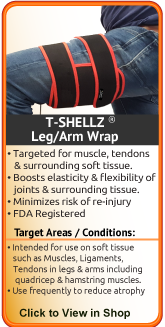
This universal leg wrap can increase healing rate of a shin, calf, groin, thigh, or hamstring

Freezie Leg wrap for cold compression of the shin, calf, groin, thigh, or hamstring

Blood Flow Stimulation Therapy with an Inferno Back wrap for the ultimate in sore back healing

Freeze Wrap Back - reduce back pain and swelling in sore, strained or overused muscles, especially in the lower back and trapezius muscles

Contact one of our Mendmeshop Customer Service Advisors for any questions help with ordering and recommended treatment directions