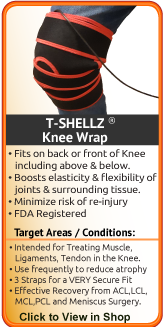
 | What Causes A Meniscus Injury?The medial meniscus is more often injured than the lateral meniscus. Medial meniscus tears generally occur in the posterior (back) horn, which is prone to injury and harder to manage than tears in the body (center), the anterior (front), or on the periphery (outside). The posterior horn is more contained and carries more of the load than the other areas and it is difficult to reach because there are bones in the way. Peripheral tears occur on the outside near the attachment to the knee capsule. They receive a lot of blood supply, so they are easily repaired. These tears often occur in conjunction with an ACL or MCL injury. Who is at Risk of a Meniscus Injury?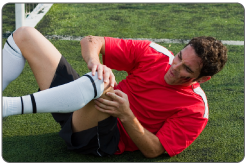 Although knee injuries are more common in women than men, men experience more meniscus injuries and tears (approximately 2.5 males: 1 female). This is believed to be due to men's participation in more aggressive sports and manual activities. For men, meniscal injuries occur most often between the ages of 31 to 40; for females mensical tears usually occur between 11 and 20 years. Occupations where you spend a lot of time in the squat position (i.e. mining or carpet-laying), or participation in contact sports or repetitive stress activities (such as running and skiing) can put you at greater risk of a meniscus injury. The 2 most common causes of meniscus injuries are acute trauma to the knee and degeneration of the knee joint tissue. In either case, a piece of the meniscus can loosen or tear and move around in your joint interfering with your normal knee movement and function. A person with a discoid meniscus is also at greater risk of experiencing a meniscus tear or damage. Acute Trauma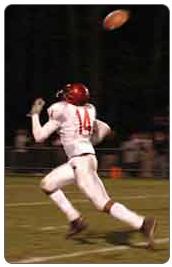 Forceful blows to the knee occur most frequently during activities such as rugby, football, baseball, soccer, basketball or racquet sports when you twist your knee, or slow down too quickly. A meniscus injury can occur during a hit if the knee is forcefully rotated while the foot is firmly planted and bearing weight. A meniscus tear can also occur from hyperflexion or hyperextension of your knee (flexion or extension beyond your knee's normal range of motion). Hyperflexion or hyperextension can occur during a car accident, while participating in sports or exercising, or during other low-impact activities if the knee is unstable. These types of tears generally affect athletes or those under 40 years of age. A medial meniscus tear will frequently occur along with other injuries such as an MCL and/or ACL tear. A combined knee injury is usually seen in contact sports when an athlete gets hit on the outside of a bent knee. A lateral meniscus tear will result more often from a knee that is bent (flexed) excessively and experiences full weight bearing, while the thighbone is turning outward; seen in sports such as skiing. Degeneration of the Fibrocartilage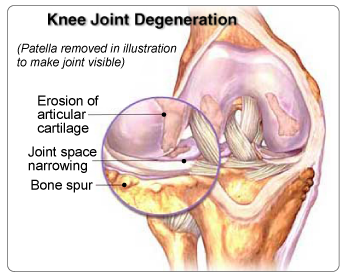 In younger people, the meniscus is very flexible and pliable (like a new rubber tire). Over time, the tissue weakens and becomes less flexible, more brittle and develops small cracks in it (like those seen in an aged car tire). In addition, normal wear and tear on the knee tissue can also lead to osteoarthritis. If osteoarthritis sets in, destructive chemical substances are released in the joint cavity which further breakdown the collagen fibers. As the menisci degenerate they become more susceptible to tears which can lead to a meniscus tearing without any associated injury. Approximately 60% of people over 65 years of age will experience some form of degenerative meniscus tear. Unfortunately, the blood supply to the menisci decreases by 20% by the age of 40 and the body's ability to heal itself becomes inhibited. As a result, it is more difficult to heal a tear caused by deterioration than an acute trauma that occurs earlier in life. With the use of a Knee TShellz® Circulatory Boost Wrap, blood flow can be increased to promote faster and more complete healing of a meniscus tear. Discoid Meniscus When in the womb your menisci are flat and disc shaped rather than crescent shaped wedges. When the meniscus does not develop into a crescent shape it is referred to as a discoid meniscus. A discoid meniscus is at greater risk of tearing than a regularly shaped meniscus. A discoid meniscus generally occurs in the lateral meniscus (1.5-3% of the general population) but can appear in the medial meniscus (0.1-0.3%). The Asian population has a greater frequency of discoid menisci the rest of the world (approximately 17% lateral discoid menisci reported). A discoid meniscus is generally found in children less than 11 years of ago but the meniscus will often change to a c-shape with maturity so children will grow out of their symptoms.  The symptoms associated with a discoid meniscus can vary greatly depending on the type, location and presence of a tear. A stable discoid meniscus may be asymptomatic; only becoming symptomatic if a tear occurs. If there is a tear present, clicking, snapping, buckling and/or locking of the knee joint, decreased range of motion, joint pain and tenderness, and atrophied quadriceps (muscles wasting away) may be experienced. A discoid meniscus has also been referred to as "snapping knee syndrome". RehabPT is a beneficial way to help decrease pain in the soft tissues, restore atrophied muscles and improve knee and leg strength and mobility. The type of PT and the duration will be dependent on the extent of your meniscus injury. Gentle massage around the injured knee area or small flexing or extending knee movements (if not painful) will also help increase blood flow, oxygen, nutrients, and will prevent stiffness. 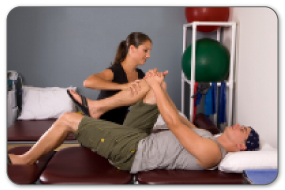 Once your pain starts to diminish, a physiotherapist will set up an individualized knee and leg strengthening and stretching exercise program for you to perform at home or in the gym. This will be based on your needs and abilities, and will help you return to performing your normal routines. Individuals will often exercise or lift weights on their own to try and build up their strength; however in doing so, they can do more damage. It is extremely important to strengthen your muscles properly, as they may have weakened during the period of non-use. A trained therapist will help to ensure your rehabilitation process is effective. For best, long-term results use PT along with an exercise program.
Product Advisors are available 9:00 am to 5:00 pm Eastern Standard Time Monday to Friday. Learn More About Knee Injuries & TreatmentsI want to learn more about post-surgery recovery. I want to learn all about common causes of knee pain. I want to learn more about TShellz Wrap® Circulatory Boost I want to learn more about Ice & Heat: Which Is Better For Treatment? I want to learn more about Knee Treatments. I want to learn more about Runners Knee. I want to learn more about Hoffas Syndrome. I want to learn more about Knee Arthritis. I want to learn more about Knee Trigger Points. FREE SHIPPING ON ALL PRODUCTS CURRENTLY ENABLED |
    |